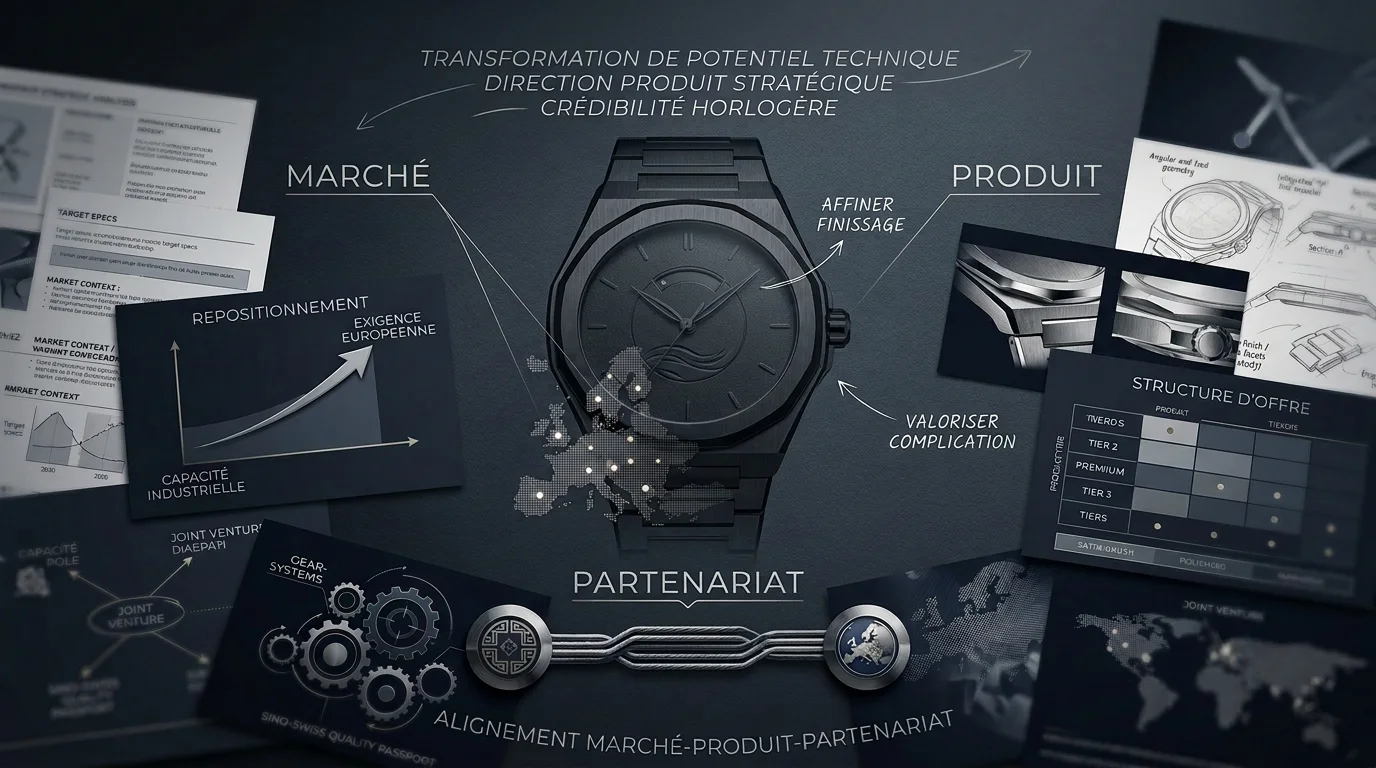
Complete watch development · Switzerland · 2018
Architecture of a three-tier brand
Build an accessible offer, a more ambitious mechanical collection, and a haute horlogerie proposition at the same time.
- Duration
- More than one year of development
- Architecture
- 3 market tiers
- Positioning
- From CHF 600 to more than CHF 100,000
- Outcome
- Through final prototypes
The initial situation
In 2018, a Swiss project owner wanted to launch a new watch brand with a particularly ambitious architecture.
From launch, the project was to cover three distinct levels:
- an entry range positioned between CHF 600 and 800;
- a mechanical range between CHF 5,000 and 10,000;
- a haute horlogerie line above CHF 100,000.
The intended volumes also differed significantly:
- approximately 10,000 pieces per year for the accessible offer;
- between 1,000 and 3,000 pieces per year for the mid-to-high range;
- up to approximately 500 pieces per year for the haute horlogerie line.
The challenge was not simply to develop three watches.
It was to build a brand capable of spanning three levels of price, technology, production, and perception without losing its identity.
Questions to resolve
How could products priced at a few hundred francs remain coherent with pieces above one hundred thousand?
Which design elements could become a shared signature?
Which movements, case architectures, finishing levels, and production methods suited each tier?
How could complexity evolve without making the collection feel like three unrelated brands?
Eyelo's role
For just over a year, Eyelo supported the project to the threshold of production.
- overall architecture of the brand and its three ranges;
- definition of product levels;
- research into a shared identity;
- design of the watches and their components;
- movement analysis and selection;
- mechanical and aesthetic customization;
- research into oscillating weights;
- case architecture;
- closure and water-resistance solutions;
- component studies and compatibility;
- prototype production;
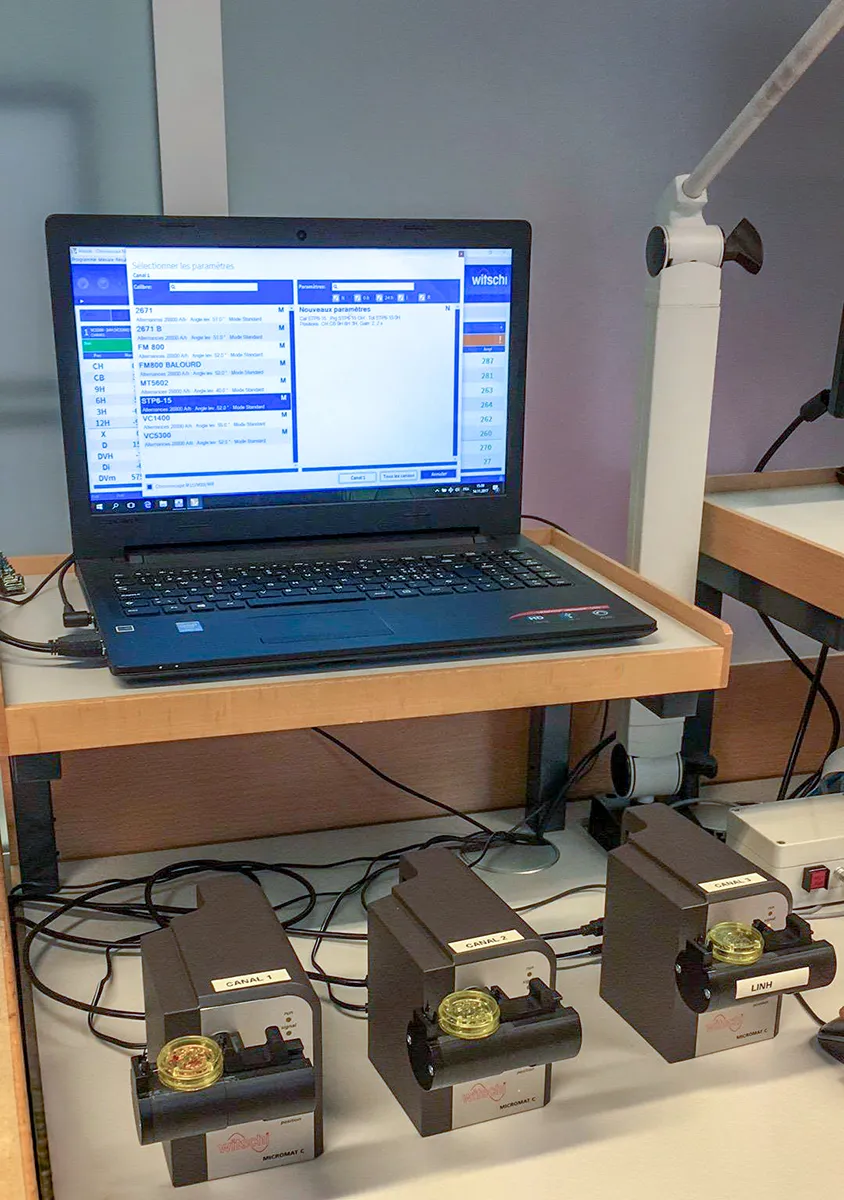
- watch testing and controls;
- planning for the commercial environment;
- design of future boutiques.
A practical process
The project quickly moved beyond the concept stage.
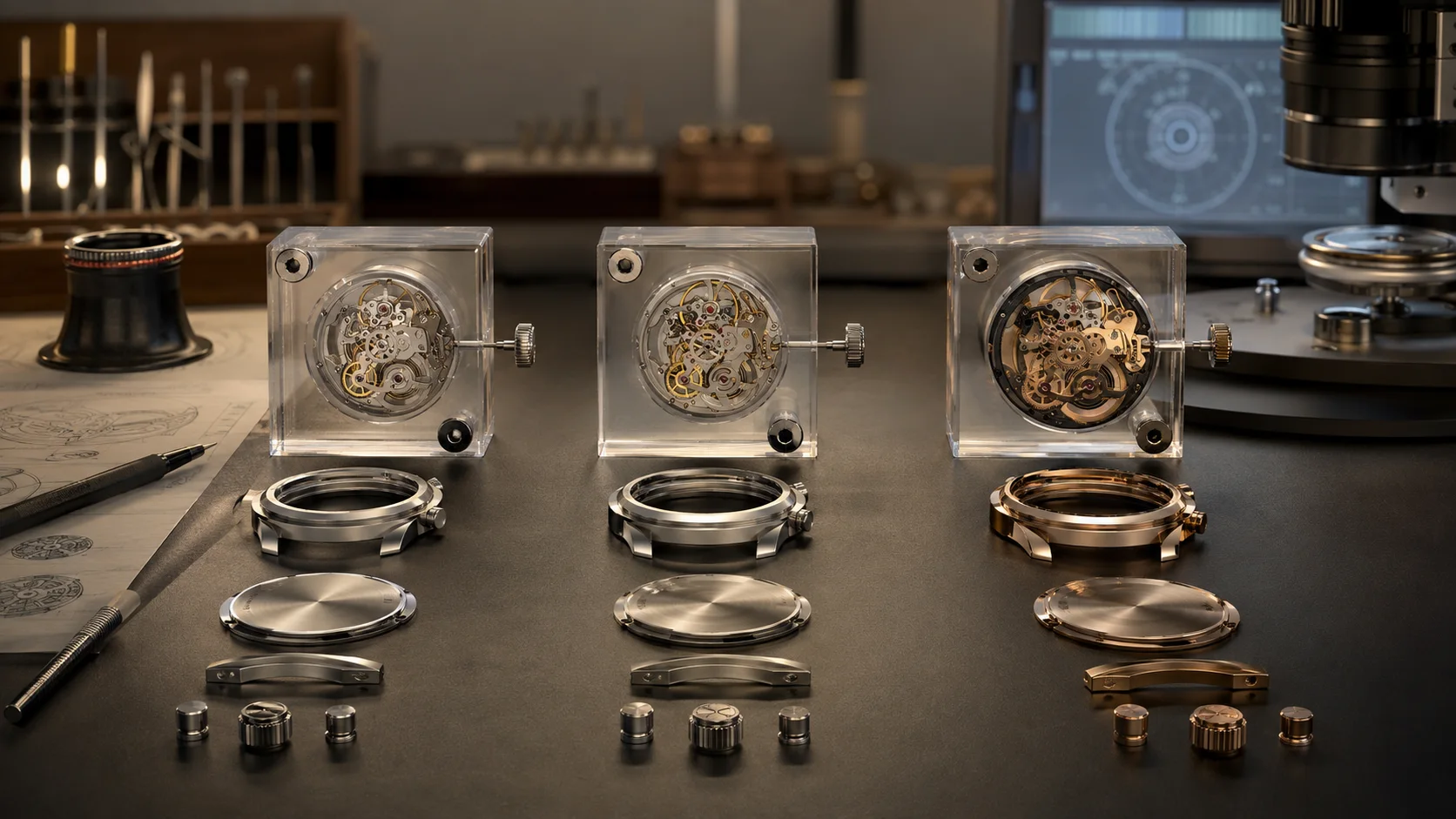
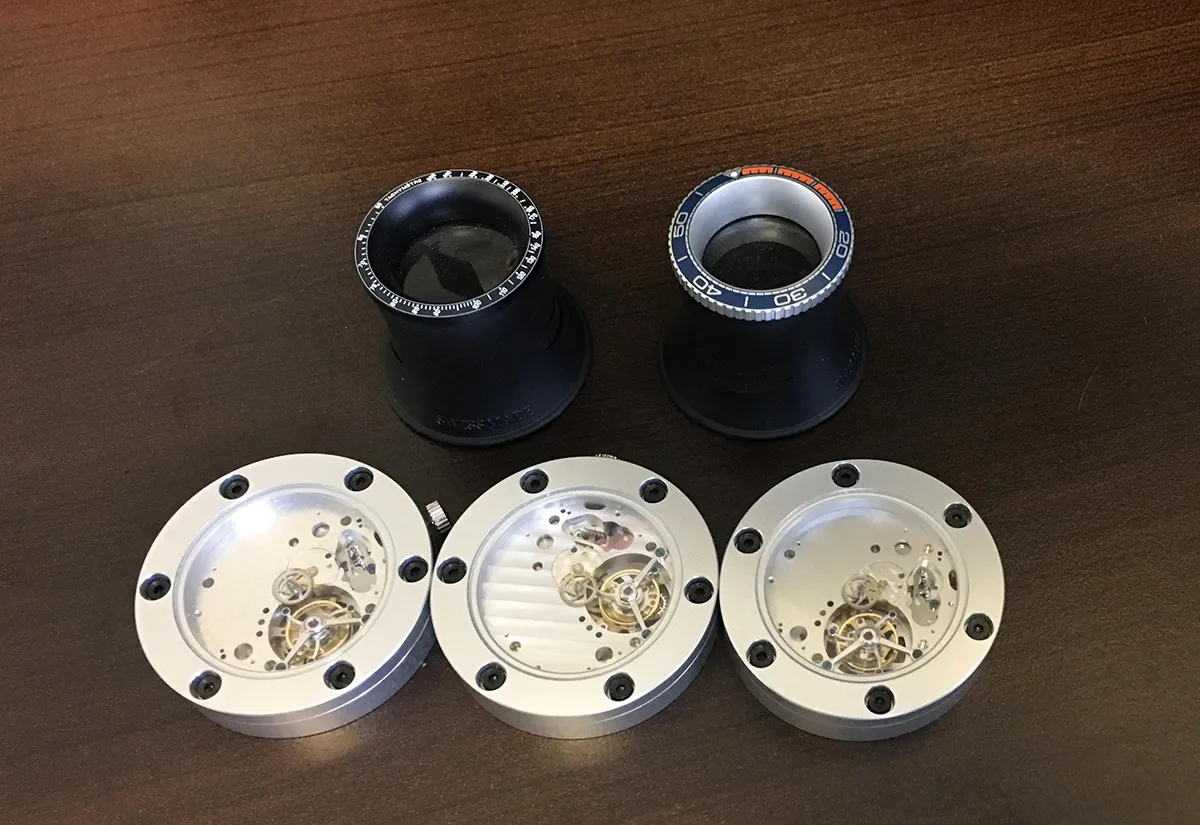
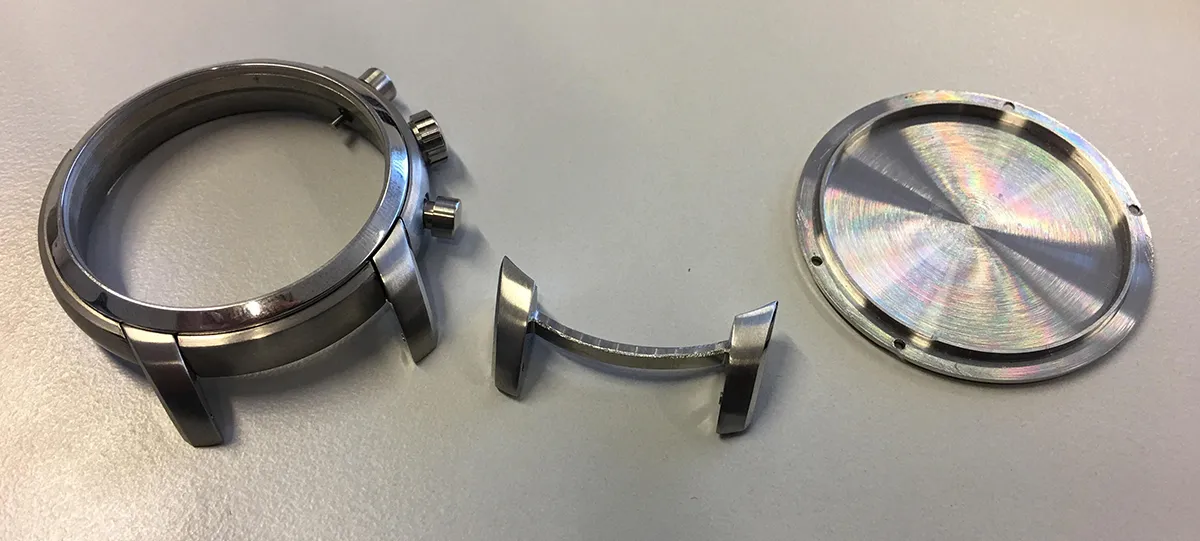
Several movements were analyzed and compared. Mechanical solutions were explored. Specific components were designed, produced, and evaluated.
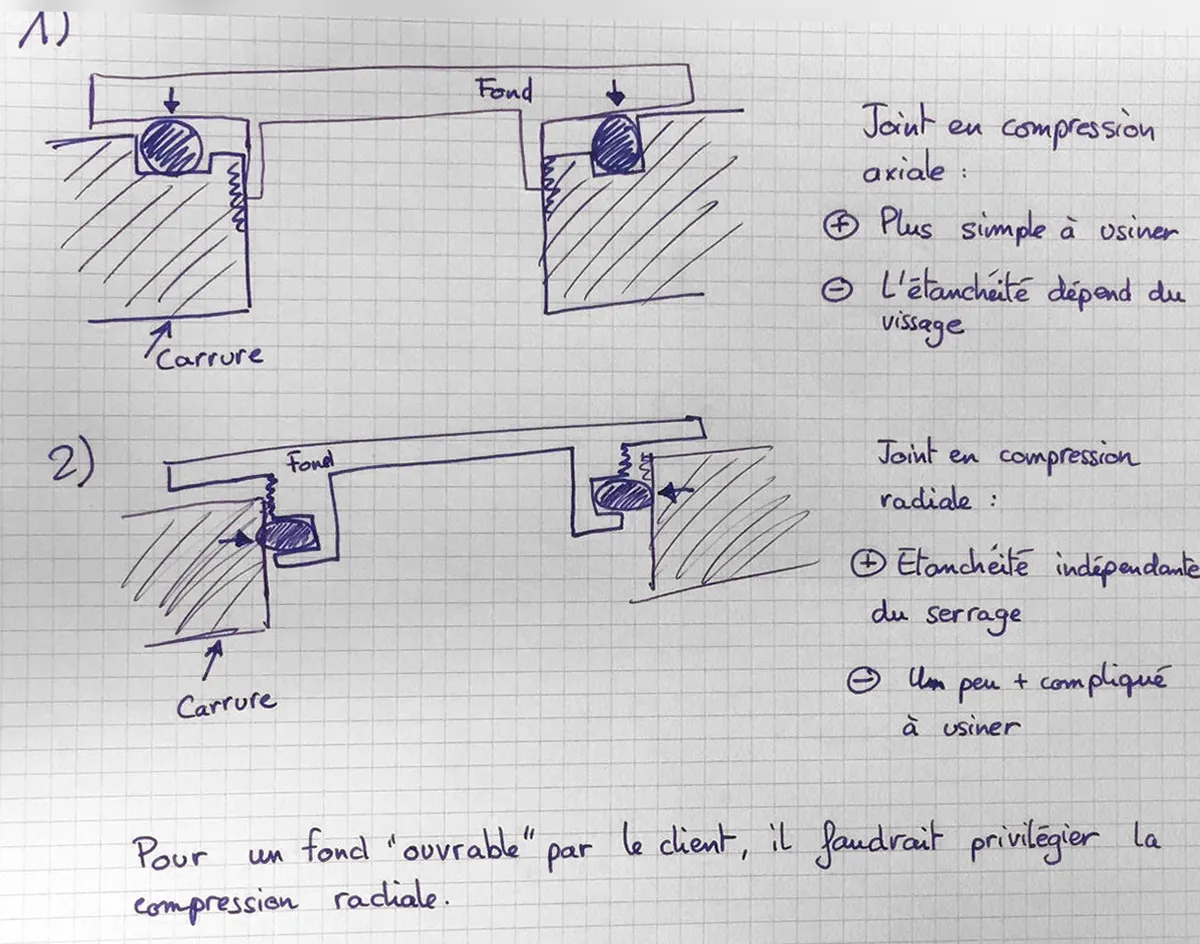
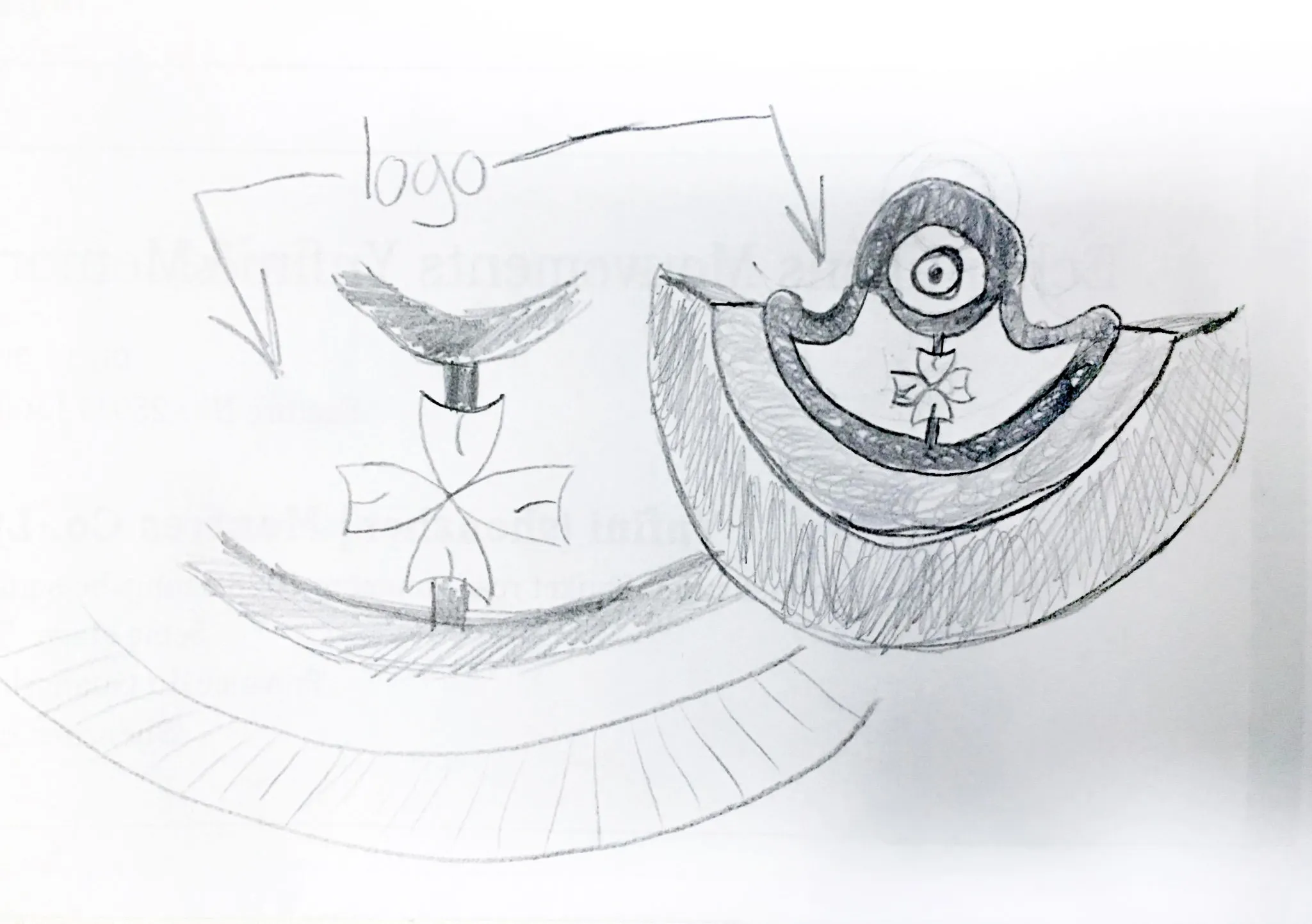
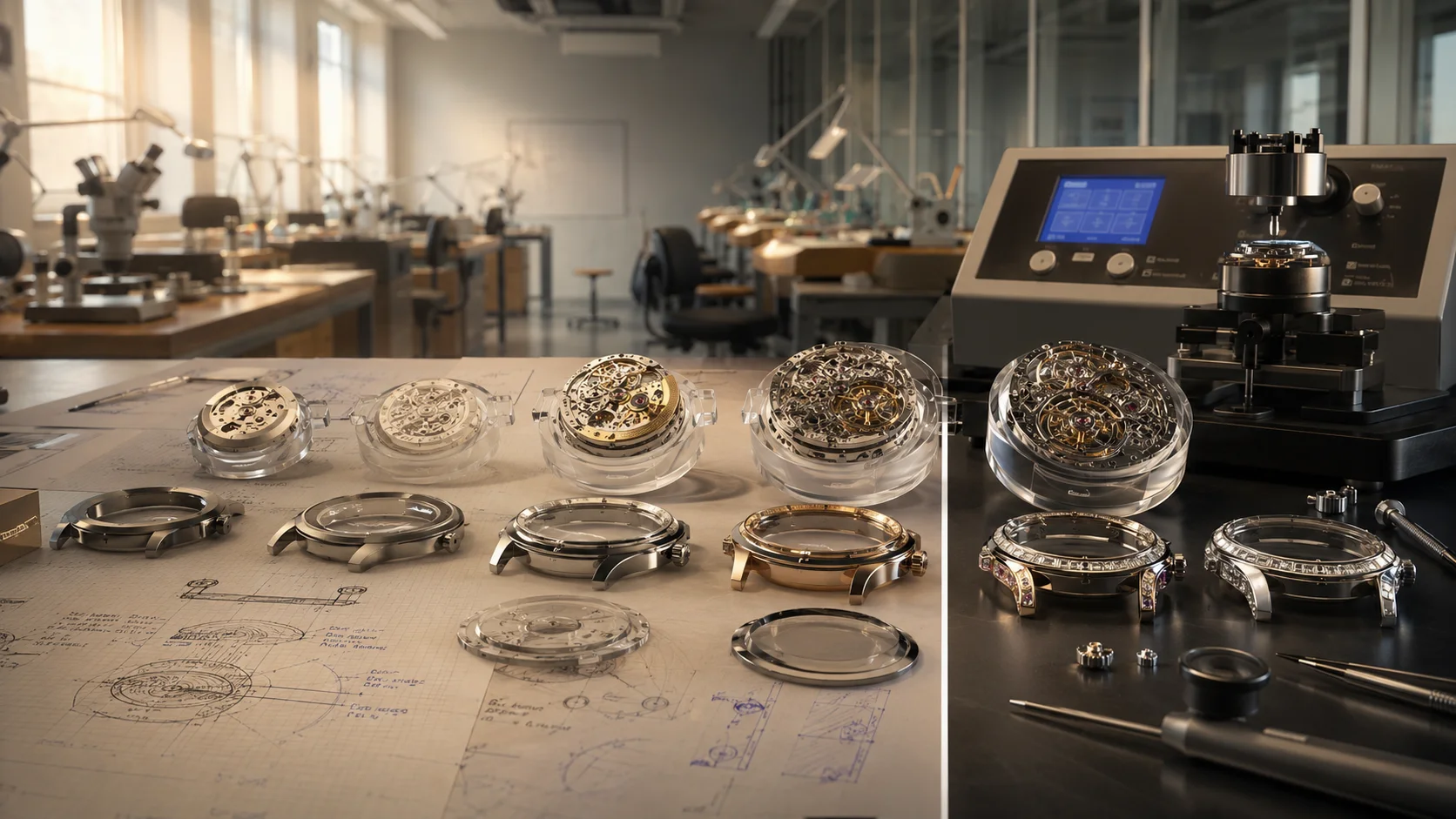
Working sketches addressed concrete questions: gasket compression, serviceability, middle-case architecture, oscillating-weight customization, movement placement, and coherence between casing and mechanics.
Each range reached the final prototype stage.
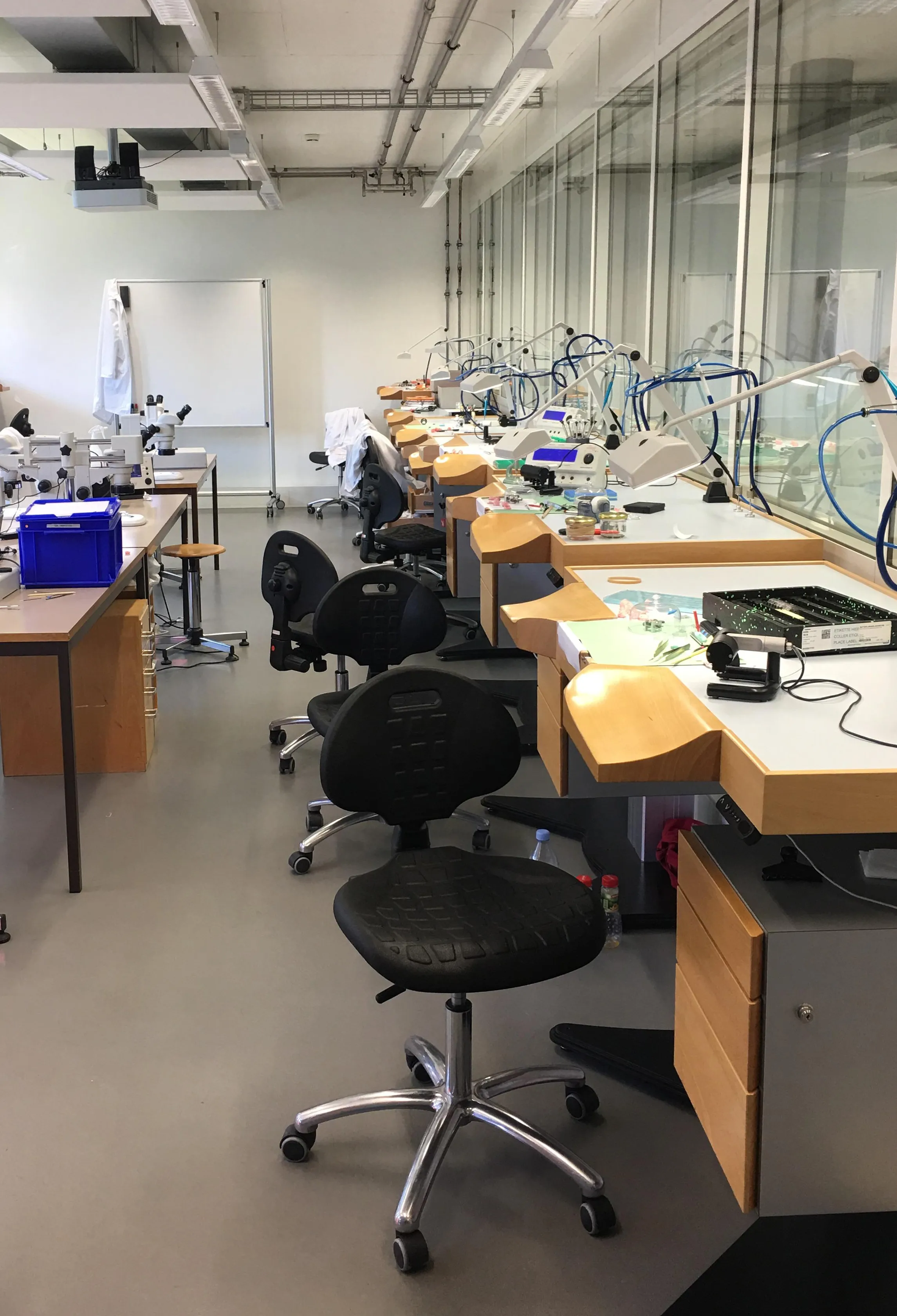
Observe & work
Development begins in an environment where movements, components, and early tests can be observed at their true scale.
Draw & solve
Working sketches make mechanical trade-offs visible before they become physical.
Compare & select
Build & validate
The drawing leaves the page, becomes a component, and is evaluated under comparable conditions.
Result
- a complete brand architecture;
- three clearly differentiated product levels;
- a shared identity across the ranges;
- selected movements and technical solutions;
- developed casings and components;
- final prototypes for every range;
- a studied commercial and architectural environment;
- an actionable foundation for entering production.
Project status
A development brought to maturity
The project was discontinued by its owners following the withdrawal of a principal investor and an internal reorganization.
This decision was independent of the development work and came after the ranges had reached prototype stage, as production approached.
The case remains representative of Eyelo's ability to support a project from brand intent to physically developed products.